
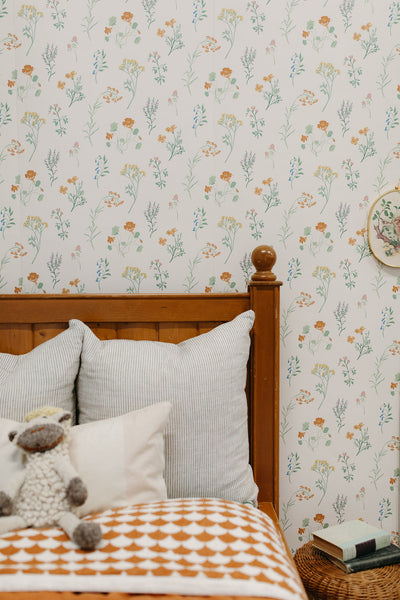


If you've got textured walls — orange peel, knockdown, skip trowel, or any of the bumpy finishes common in American homes — you've probably asked yourself: will peel and stick wallpaper actually stick?
The short answer: most won't. But some do.
We're going to walk you through exactly why most peel and stick wallpapers fail on textured walls, what makes the ones that work actually work, and share the results of an independent 5-month test that put Anewall's peel and stick wallpaper up against eleven other brands on real textured walls.

The Quick Answer
Yes, peel and stick wallpaper can work on textured walls — but only if you choose the right brand. Independent testing by Wildfire Interiors identified just four brands out of twelve that passed a 5-month real-world textured wall test without peeling, curling, or falling off:
- Anewall
- Rifle Paper Co.
- Love vs. Design
- Spoonflower
Most peel and stick wallpapers rely on thin vinyl and weak adhesives that simply can't grip the irregular surface of a textured wall. The ones that work use heavier materials and stronger adhesives engineered to lock into the texture instead of bridging across it.

Why Most Peel and Stick Wallpapers Fail on Textured Walls
Textured walls aren't flat. Orange peel has thousands of tiny bumps per square foot. Knockdown has broader peaks and valleys. Skip trowel has pronounced ridges. When you press a thin, lightweight peel and stick film against that surface, here's what happens:
1. The adhesive only touches the peaks. The valleys between bumps never make contact. You end up with maybe 40-60% of the adhesive actually doing its job.
2. Air pockets form in the valleys. Without full contact, air gets trapped underneath, which eventually expands and pushes the wallpaper away from the wall.
3. The corners curl first. Because the adhesion is so weak, the edges lose grip and start peeling within weeks — sometimes days.
4. Temperature and humidity accelerate failure. Homes aren't climate-controlled museums. Walls flex, expand, and contract throughout the day. Weak adhesives can't handle the stress.
The result? A gorgeous mural that looks perfect for two weeks and then starts slowly falling apart.

What Makes Peel and Stick Work on Textured Walls
The brands that pass the textured wall test share a few specific characteristics:
Heavier Material Weight
Thin vinyl bridges across texture. Thicker, more flexible materials can actually conform to the bumps and valleys, getting maximum contact with the wall. Anewall's peel and stick wallpaper uses a heavier-weight woven polyester fabric that behaves more like traditional wallpaper than typical thin vinyl films.
Aggressive, Residue-Free Adhesive
There's a tradeoff in peel and stick: the stronger the adhesive, the harder it is to remove. Cheap brands use weak adhesives to make removal easy — but that same weakness makes them fail on textured walls. The best brands use strong adhesives specifically engineered to grip texture while still being removable without damaging your wall.
Microperforated Backing
Air bubbles are the enemy of any peel and stick install, but especially on textured walls where valleys naturally trap air. Microperforated backings let trapped air escape as you smooth the wallpaper down.
Proper Installation Technique
Even the best peel and stick won't work if it's installed wrong on a textured wall. You need to press harder, work in smaller sections, and use a felt squeegee to push adhesive into the valleys — not just smooth it across the peaks.

The Wildfire Interiors 5-Month Test
Emily at Wildfire Interiors put twelve peel and stick wallpaper brands to the test on real textured walls in her home. She tracked them for five months — through summer heat, winter HVAC cycles, and the kind of everyday wear a real wall goes through.
Of the twelve brands she tested, only four passed without peeling, curling, or lifting:
- Anewall
- Rifle Paper Co.
- Love vs. Design
- Spoonflower
The other eight? Within 5 months they had visible lifting, corner curl, or outright failure in one or more spots.
This is the kind of independent testing we trust. Emily wasn't paid by any of these brands. She bought the wallpaper herself, installed it herself, and photographed the results over time. Her test is the closest thing to a real-world answer on "will this work in my house?"
Why Anewall Works on Textured Walls
Our peel and stick wallpaper is designed for real American homes — and that means we assumed from the start that most of our customers have textured walls. Here's what's different about how we make ours:
Material: Heavier-weight woven polyester, not the thin plastic film most brands use. It has enough body to conform to texture without tearing or stretching.
Adhesive: A water-activated permanent-but-removable adhesive that's strong enough to grip texture but doesn't damage paint or drywall when you take it down.
Made to measure: Because we make every mural to fit your wall, you're not cutting and seaming a dozen thin panels. Fewer seams means fewer failure points on textured walls.
Printed in our Arizona studio: Every mural is made to order in Gilbert, Arizona, so we can control quality at every step. No third-party printers, no mystery materials.

How to Install Peel and Stick Wallpaper on Textured Walls
If you've got textured walls, here's what we've learned works best:
1. Clean the wall first
Wipe it down with a slightly damp microfiber cloth to remove dust and oils. Let it fully dry before you start.
2. Prime if necessary
Fresh drywall, glossy paint, or anything that feels slick should be primed or at least sanded lightly. Matte paint that's been on the wall for 3+ months is usually fine.
3. Work in smaller sections
Don't try to unroll the whole panel at once. Peel back a foot at a time and press as you go.
4. Use a felt squeegee, not a plastic one
Plastic squeegees skim across the peaks of textured walls. Felt squeegees press the adhesive into the valleys, which is where most peel and stick fails.
5. Apply pressure, not speed
Texture needs firm, even pressure to get good contact. Take your time and press hard.
6. Trim the edges last
Use a fresh razor blade and a straight edge. Trim right after you've pressed the panel down while the adhesive is still fully tacky.
Ready to Try Anewall on Your Textured Walls?
We make hand-illustrated wallpaper and custom wall murals in Gilbert, Arizona. Every design is available in our peel and stick material, and every mural is made to order to fit your wall exactly. Free samples are always available so you can test on your own walls before committing.
Shop Peel and Stick Wallpaper →
Use Code: FREEBIE for a free sample (USA only) →

Frequently Asked Questions
Does peel and stick wallpaper work on orange peel texture?
Yes, if you choose a brand with a heavier material and strong adhesive. Orange peel is actually one of the easier textured finishes for peel and stick because the texture is subtle. Anewall peel and stick has been tested and proven to work on orange peel walls.
Does peel and stick wallpaper work on knockdown texture?
Knockdown is more challenging than orange peel because the texture is more pronounced. The brands that work on orange peel don't always work on knockdown. Anewall works on most knockdown textures — for the most aggressive knockdown, we recommend testing a small sample first.
Will peel and stick wallpaper damage my textured walls when I remove it?
Not if you choose the right brand and remove it correctly. Pull slowly at a 45-degree angle, not straight out from the wall. Anewall is designed to remove cleanly from properly painted drywall without taking paint with it.
How long does peel and stick wallpaper last on textured walls?
Quality peel and stick should last for years on textured walls — we've had customers with installs going strong after 3+ years. Budget brands often fail within months. The Wildfire Interiors 5-month test is a good indicator of which brands are built to last.
Can I use peel and stick on newly painted textured walls?
Wait at least 3 weeks after painting before installing any peel and stick wallpaper. Fresh paint is still curing and the adhesive won't bond properly until it's fully cured.
Do I need to sand my textured walls before applying peel and stick?
Usually not, if you're using a brand built for textured walls. Sanding removes the texture entirely, which defeats the purpose. Just clean and dry the wall before installing.


Leave a comment